START HERE
Complete mix-design workflow
Define performance, establish target strength and w/cm, estimate water, close the volume balance, correct moisture and run trials.
Read the guide →Practical guides for mix proportioning, fresh-concrete testing, site control and defect diagnosis. Each guide is written to answer the decision behind the number: what changes the result, what to inspect in the field, and what still needs project-specific verification.
These are the core guides to read before treating any calculated proportion as a usable construction mix.
Define performance, establish target strength and w/cm, estimate water, close the volume balance, correct moisture and run trials.
Read the guide →See how strength, durability and real free-water content interact—and why lower is not automatically better if the concrete cannot be placed or cured.
Read the guide →Understand SSD, absorption, free surface water, corrected aggregate mass and why wet sand can quietly change the effective w/cm.
Read the guide →Measure fresh properties, yield and strength; adjust one variable at a time and keep a record that can be traced back to the original assumptions.
Read the guide →A proportioning calculation cannot detect poor handling, uncontrolled water addition, inadequate consolidation or finishing at the wrong time.
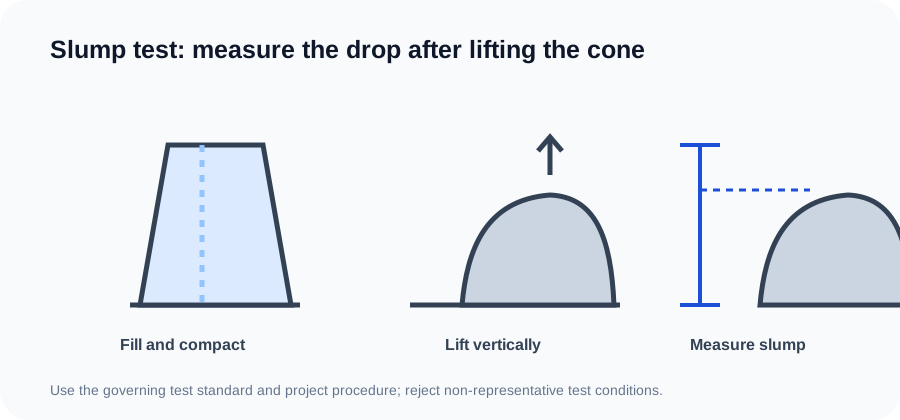
Slump testingWhat the result tells you, what it does not, and how to recognise an invalid test.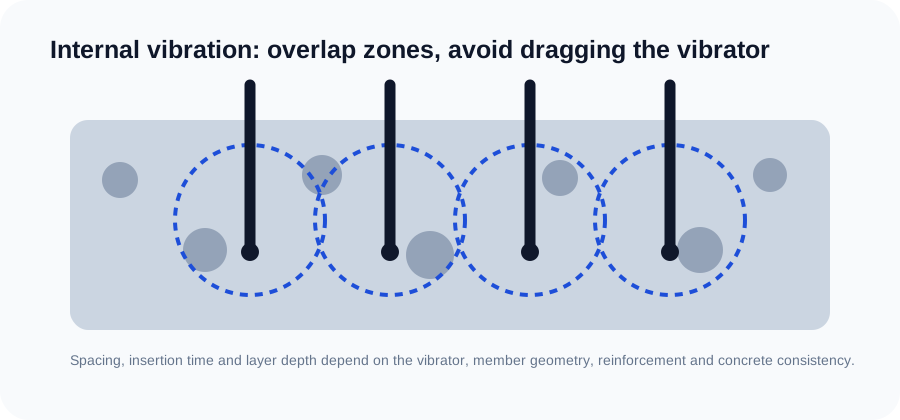 Vibration & consolidationInsertion pattern, overlapping influence zones, warning signs and common mistakes.
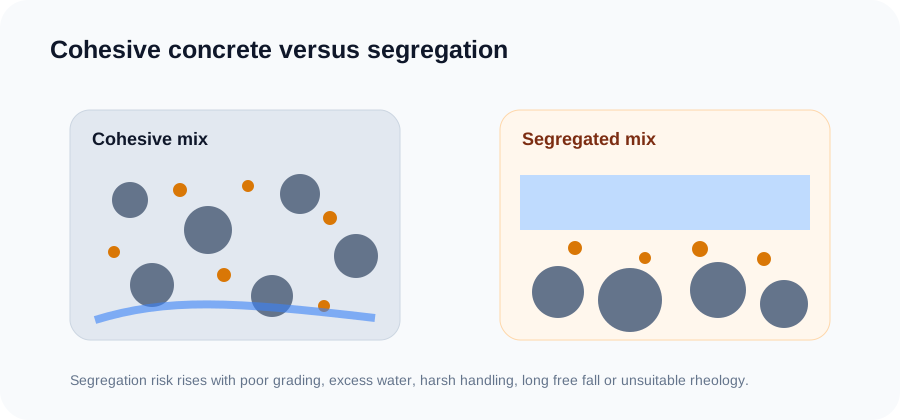 SegregationSee how mixture stability can be lost during batching, transport, discharge or placement.
Why water rises, what makes it worse and why finishing over bleed water can create a weak surface.
Read guide →Protect the moisture and temperature conditions needed for continued hydration and surface durability.
Read guide →Mock-ups, release agents, colour consistency, bugholes and the interaction between concrete, formwork and workmanship.
Read guide →Useful troubleshooting begins by separating what you can see from the mix, placement, formwork or curing conditions that may have caused it.
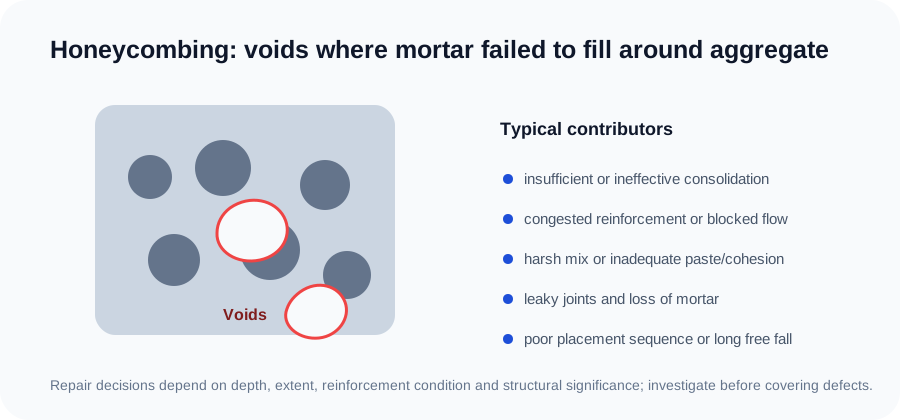 HoneycombingCause tree covering access, consolidation, cohesion, leakage and placement sequence.
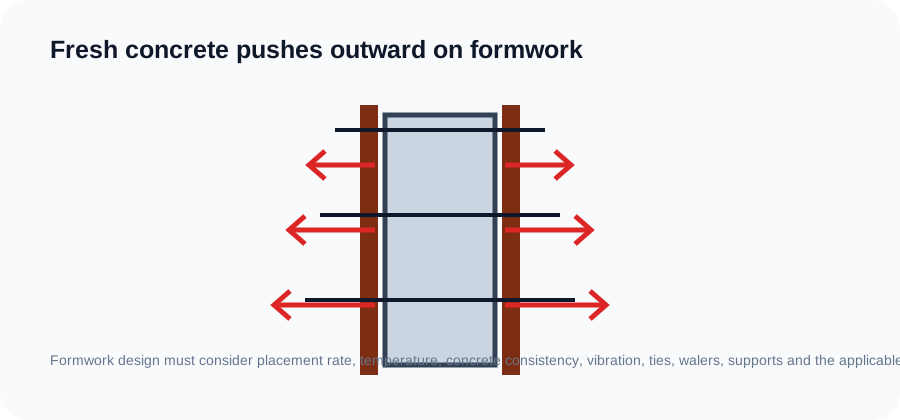 Formwork & shutteringFresh-concrete pressure, leakage, bulging, blowouts, ties, supports and inspection.
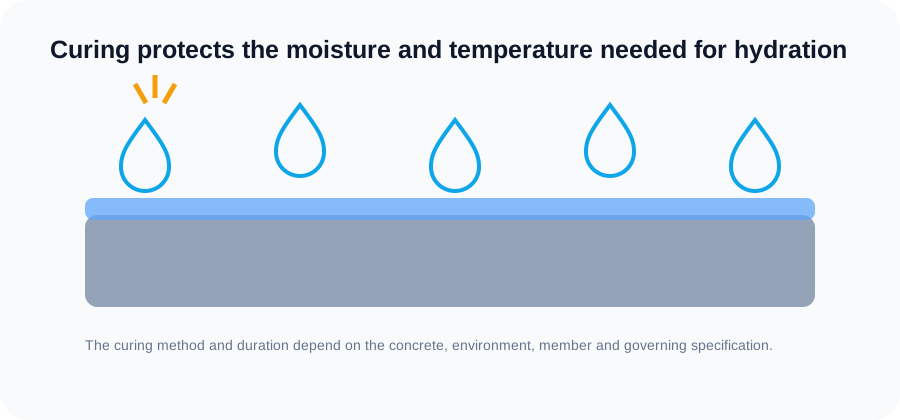 Curing failuresWhy early moisture and temperature control can influence cracking, surface quality and later durability.
Exposure, transport mechanisms, cover, permeability, air, binder system and curing all matter. The governing regional standard and project specification remain the final authority.
A practical overview of why environmental exposure can control w/cm, binder, air and other requirements independently of strength.
Read guide →Distinguish powder tankers, transit mixers, central-mixed delivery and volumetric concrete equipment.
Read guide →Move from engineering principles into the India, US, UK, European or German calculator and guidance set.
Choose a regional method →Examples and diagrams on this site are explanatory. They do not replace a current standard, material test, project specification, trial batch or approval process.