STRENGTH
Concrete strength classes
Understand the Cxx/yy notation and why class alone cannot determine constituent quantities.
Explore classes →EN 206 provides a concrete specification, performance, production and conformity framework. This site uses strength, exposure and constituent inputs to build a transparent preliminary mixture, while keeping national provisions and project-specific requirements outside the calculator where they belong.
EN 206-1:2026 was published in March 2026 and supersedes the previous EN 206:2013+A2:2021 framework at European level. National publication, transition and contractual adoption can differ, so always check the standard actually in force for the project location.
| Layer | What it controls | How to treat it here |
|---|---|---|
| EN 206-1:2026 | European concrete performance, requirements, factory production control and assessment framework | Use the site to understand the concepts; verify the official document for binding requirements |
| National standard/provisions | Country-specific application, complementary requirements and accepted constituent combinations | Do not transfer limits from one country into another without verification |
| Project specification | Concrete actually required for the structure | Use project strength, exposure, consistence and material requirements as inputs |
| Producer / trials | Demonstrates that the actual constituents and production process meet the specification | Treat calculator quantities as a preliminary starting point only |
The paired cylinder/cube class is one part of the concrete description. Exposure, consistence, maximum aggregate size, chloride class, constituent rules and national provisions can all affect the specified concrete.
Understand the Cxx/yy notation and why class alone cannot determine constituent quantities.
Explore classes →See why environmental actions change composition limits and verification requirements.
Read guide →Follow the educational calculation path without confusing it with an EN 206 conformity procedure.
See method →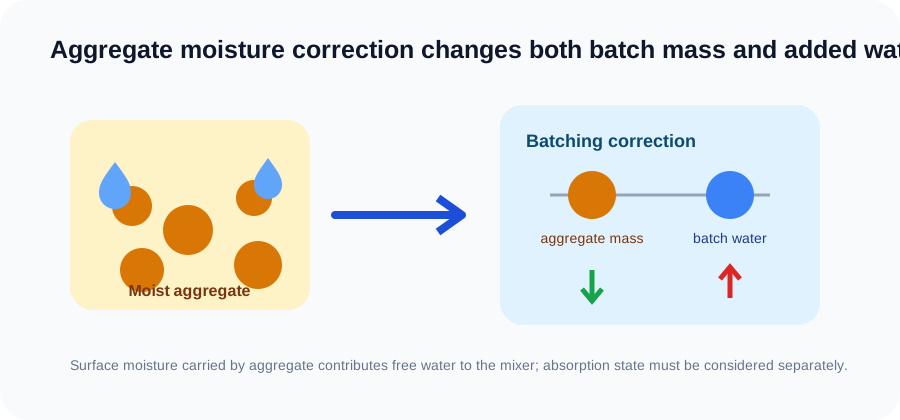 Moisture correctionTrack water carried by aggregate so the intended free-water balance is not lost.
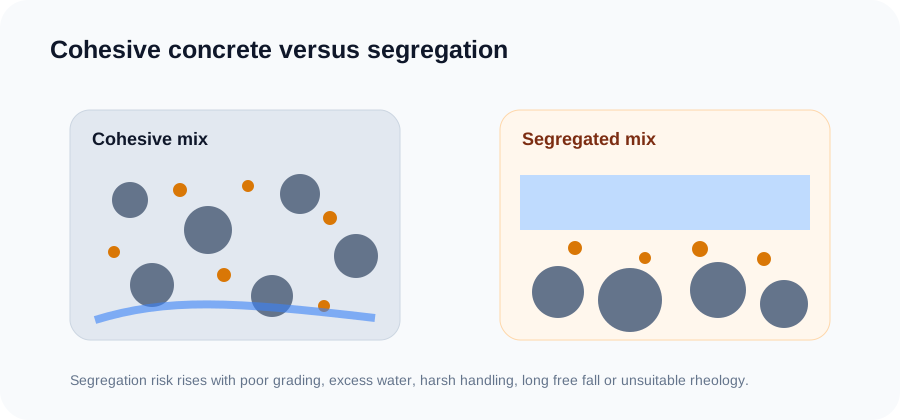 Mixture stabilityRecognise when handling, grading or excess water causes the fresh mixture to separate.
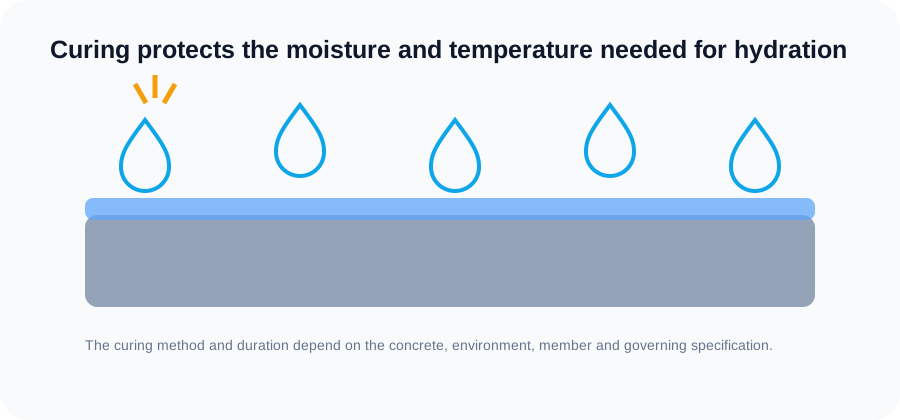 CuringProtect early-age conditions after placement; design strength alone does not guarantee durable concrete.
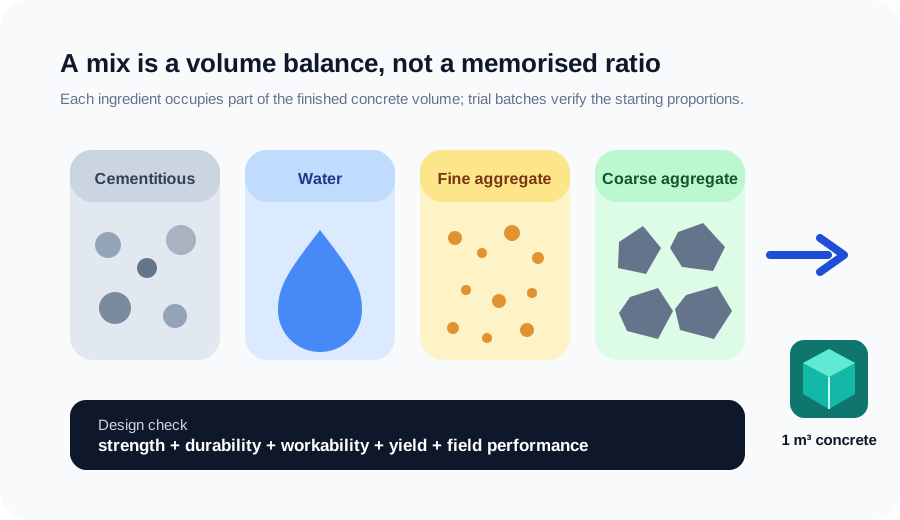
Explore a transparent constituent balance using selected strength and exposure inputs.
Open calculator →Read about classes, exposure and specification before using values in a project context.
Browse guides →Apply your own rates to the preliminary material quantities.
Estimate cost →Explore the influence of constituent quantities with project-appropriate factors.
Estimate carbon →Measure fresh behaviour, yield and strength before considering a preliminary mixture ready for production.
Read guide →Continue into slump, vibration, segregation, formwork, honeycombing and curing.
Open library →EN 206 conformity involves specification, production control, assessment and national application—not merely a cement, water and aggregate calculation.