CURRENT EDITION
EN 206-1:2026 transition
What changed at the standards-family level and why live projects still need an edition check.
Read guide →This library separates four things that are often mixed together: concrete classification, durability/specification requirements, preliminary proportioning, and trial/production verification. Start with the path closest to the decision you are making.
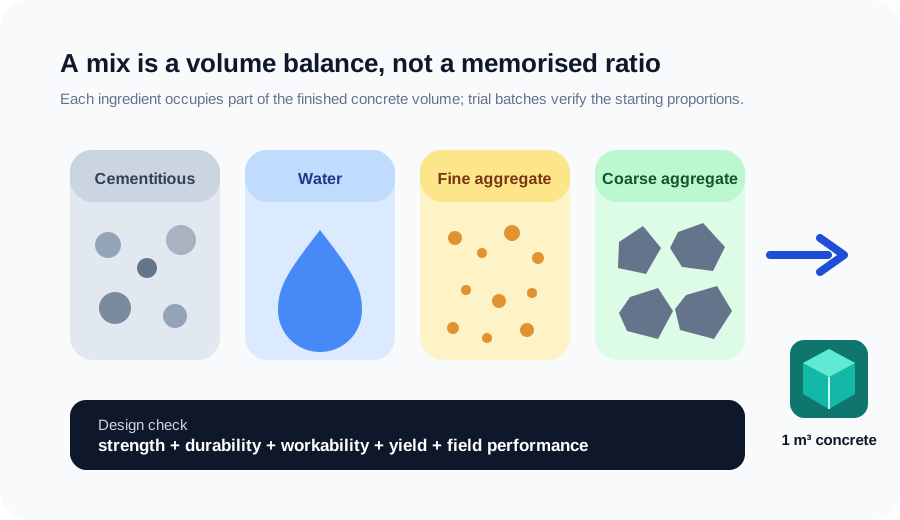
These pages help you distinguish strength class, exposure and specification routes before you start proportioning.
What changed at the standards-family level and why live projects still need an edition check.
Read guide →Why BS 8500, DIN 1045-2 and other country systems cannot be reduced to one generic annex table.
Read guide →Separate performance requirements from a specified composition before deciding who owns the mixture design.
Read guide →Understand cylinder/cube notation and why a class is not a cement:sand:aggregate recipe.
Read guide →Use exposure to define durability requirements—not as a shortcut to one universal mix.
Read guide →The calculator is easier to use responsibly when you know which inputs are verified requirements and which are trial assumptions.
Our transparent absolute-volume workflow, clearly separated from EN 206 conformity.
Read method →How an entered w/c and a verified project cap affect binder demand.
Read guide →Why fresh-concrete consistency influences trial water demand but cannot be reduced to one fixed number.
Read guide →Aggregate size, shape, consistence and water-reducer response influence the first trial.
Read guide →Understand calculated content, verified project minima and why binder systems need project-specific checks.
Read guide →Learn the concept without assuming every national implementation or cement combination uses identical rules.
Read guide →Trial mixturesMeasure fresh behaviour, yield and hardened performance before production use.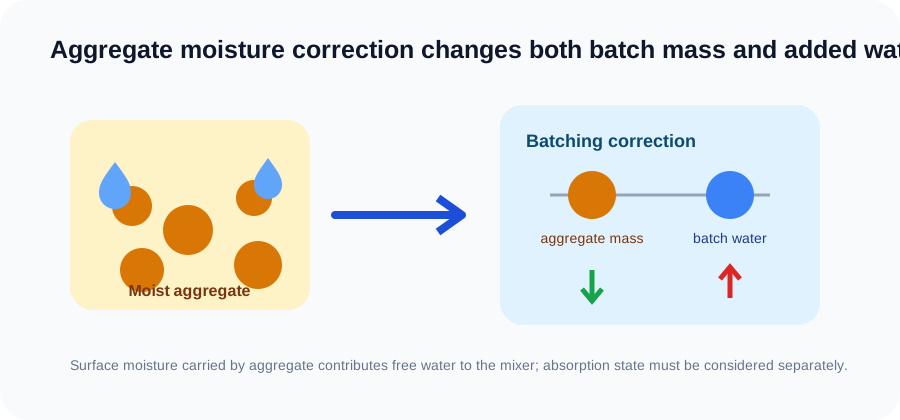 Moisture correctionKeep the real free-water balance aligned with the intended trial mixture.
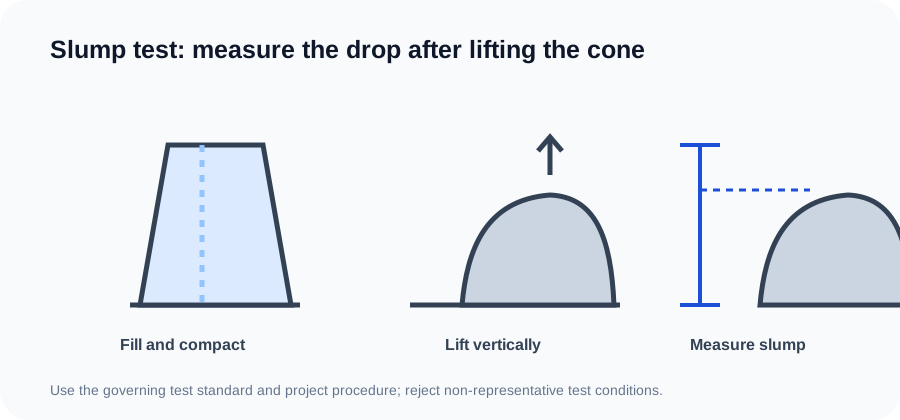 Consistency testingUse the governing test method and interpret the result as a production/consistency signal.
Size, density and grading affect volume allocation and water demand.
Read guide →Fine content affects cohesion, workability and the balance between paste and coarse aggregate.
Read guide →Use combination-specific supplier and trial data rather than assuming a brochure maximum.
Read guide →Understand why specified air is a system requirement tied to exposure, materials and aggregate size.
Read guide →Catch hidden water, copied limits, skipped trials and unverified material assumptions.
Read guide →No. They explain engineering and specification concepts. The current national publication, complementary provisions and project specification remain the binding references.
No. Exposure is recorded for context. Composition limits are entered only when you have verified them for the actual project.