STRENGTH
3000 psi concrete
See what strength does and does not tell you, then move into the calculator with real project inputs.
Read guide →The US calculator follows the absolute-volume proportioning logic described in ACI PRC-211.1-22. Enter the project and material inputs, inspect every major step, then use trial batches and project requirements to decide what needs adjustment.
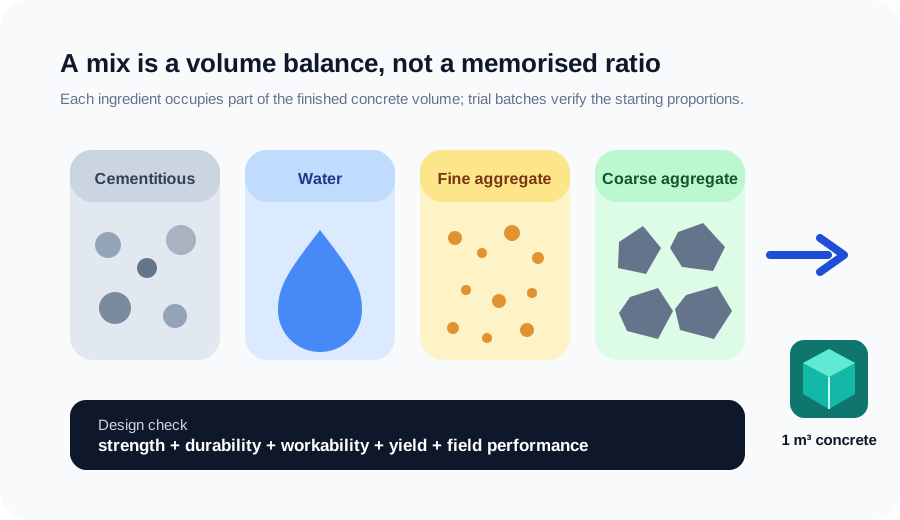
“3000 psi concrete” or “4000 psi concrete” tells you a specified strength, not a complete cement:sand:stone ratio. Exposure, workability, aggregate, air and project requirements can produce very different mixtures at the same strength.
See what strength does and does not tell you, then move into the calculator with real project inputs.
Read guide →Explore water control, durability constraints, workability and trial-batch checks around a common specified strength.
Read guide →Understand why tighter control of materials, w/cm, production variability and trial evidence becomes more important.
Read guide →| Decision | What the site helps you inspect | What still comes from the project |
|---|---|---|
| Required average strength | Starting strength target and calculation trail | Specified f′c and acceptable production/test history |
| w/cm | Adopted ratio and its effect on cementitious content | Durability/specification limits and approved materials |
| Water | Starting demand from workability and aggregate conditions | Actual aggregate shape, admixture response and trial behaviour |
| Aggregates | Absolute-volume balance and fine/coarse allocation | Current grading, moisture, absorption and source variability |
| Final use | Trial-batch starting quantities | Testing, adjustment, submittal and project acceptance |
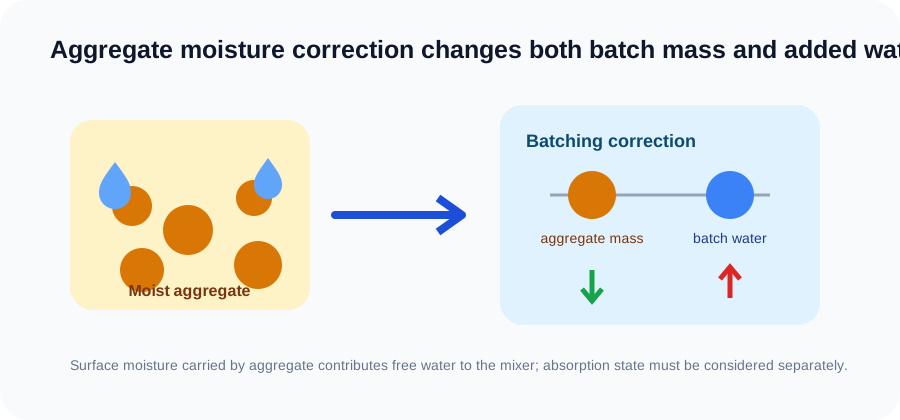 Moisture correctionWet aggregate changes both batch mass and the free water entering the mixer.
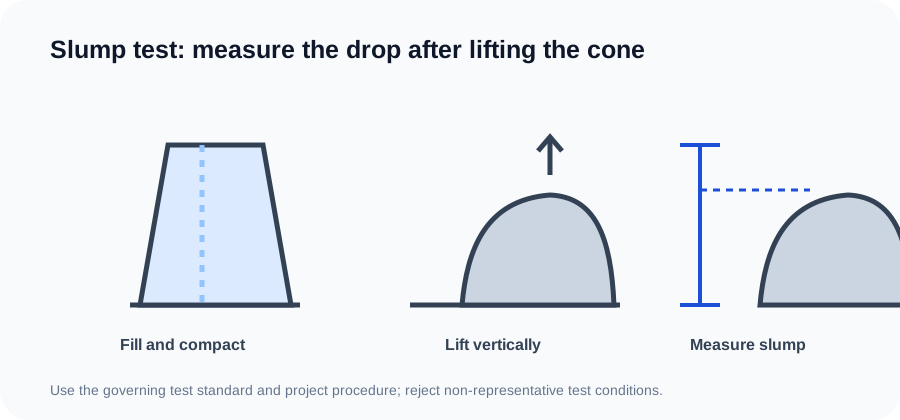 Slump testingUse consistency tests to detect change without treating slump as a direct strength measurement.Trial batchesMeasure fresh properties, yield and strength, then adjust one design lever at a time.
Build the preliminary mixture and inspect the absolute-volume trail.
Open calculator →Keep specified strength separate from exposure-driven limits and project requirements.
Read guide →Understand why supplementary cementitious materials change proportioning, performance and trial strategy.
Read guide →A practical review of assumptions that commonly fail when a calculation reaches the field.
Read guide →Use your own local material rates against the calculated quantities.
Estimate cost →Explore how material quantities influence an indicative embodied-carbon estimate.
Estimate carbon →The site uses its mixture-proportioning concepts as an educational and preliminary calculation framework. Construction use still depends on the governing code/specification, approved materials, trial evidence and project acceptance process.
The calculator can generate a paid formatted report for your own calculation. It records the calculation trail and quantities; it does not turn a preliminary mixture into an approved submittal, laboratory certificate or professional seal.