CLASSES
Strength-class guide
Understand the cylinder/cube notation and why class selection is only one part of specification.
Explore classes →Use the UK tools to explore a transparent preliminary mixture while keeping specification and durability decisions visible. The calculator is a learning and planning aid—not a declaration of conformity with BS 8500 or BS EN 206.
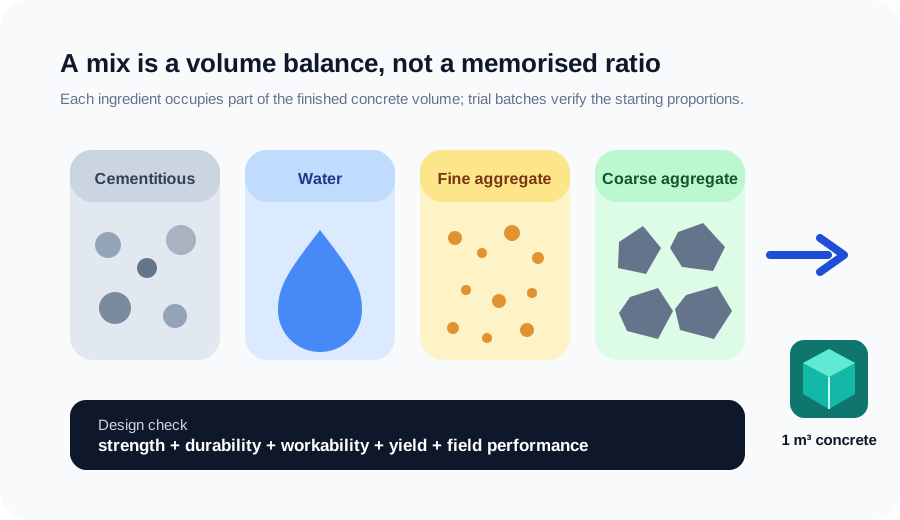
BS 8500 is a complementary British Standard, not simply a “national annex.” The UK standards landscape is also transitioning to BS EN 206-1:2026, so the project-specified editions and transitional requirements matter.
| Reference | Role in the UK context | How to use this site |
|---|---|---|
| BS EN 206-1:2026 | Concrete specification, performance, production and conformity framework | Use our pages as explanation and preliminary calculation support, not a compliance certificate |
| BS 8500-1:2023 | Complementary UK method of specifying and guidance for the specifier | Use the guides to understand strength/exposure decisions and then verify the current project requirements |
| Project specification | Defines the concrete actually required for the work | Enter the project requirements rather than copying a generic class recipe |
| Trial/production evidence | Shows whether the selected constituents and proportions actually perform | Use the calculated mix only as a starting point for verification and adjustment |
Two concretes with the same strength class can differ because exposure, consistence, aggregate, cement combination, air, production method and project requirements differ.
Understand the cylinder/cube notation and why class selection is only one part of specification.
Explore classes →Connect environmental exposure to concrete specification without reducing durability to strength alone.
Read guide →Follow the calculation route and see which values are assumptions that need trial evidence.
See method →Explore strength, exposure and constituent quantities with a visible calculation trail.
Open calculator →Read the specification and durability context before treating a calculated value as a requirement.
Browse guides →Apply project material prices to the preliminary quantities.
Estimate cost →Explore the effect of constituent quantities using your chosen factors.
Estimate carbon →Move from calculated quantities into measured fresh and hardened behaviour.
Read guide →Diagnose segregation, honeycombing, vibration and curing issues using the field library.
Open library →It is deliberately transparent about being a preliminary engineering tool. Concrete specification, production, conformity and acceptance require the current standards and the project’s own procedures.
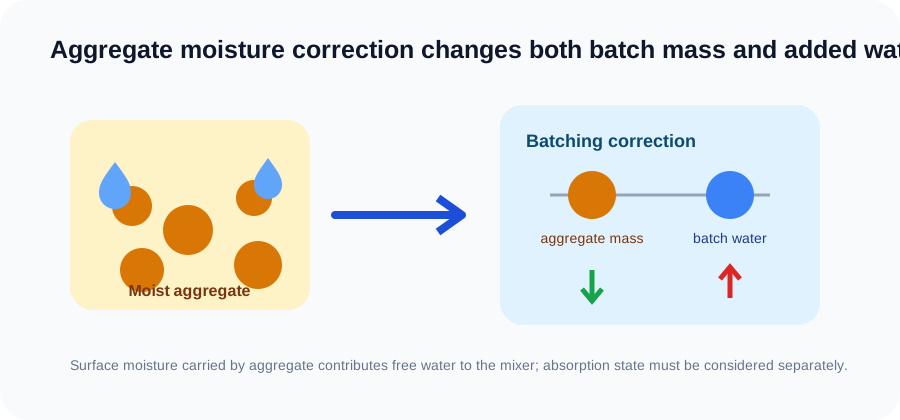 Aggregate moistureSurface water changes the effective water balance and batch weights.
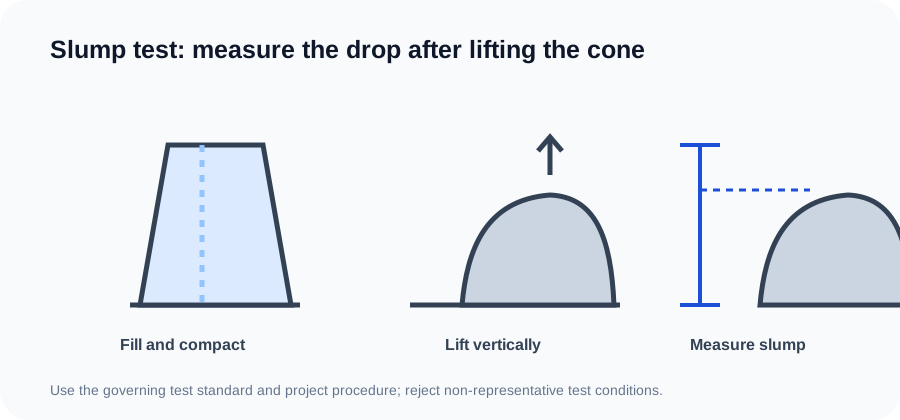 Consistency testingUse the specified test and recognise when a result reflects a changed batch or poor test conditions.
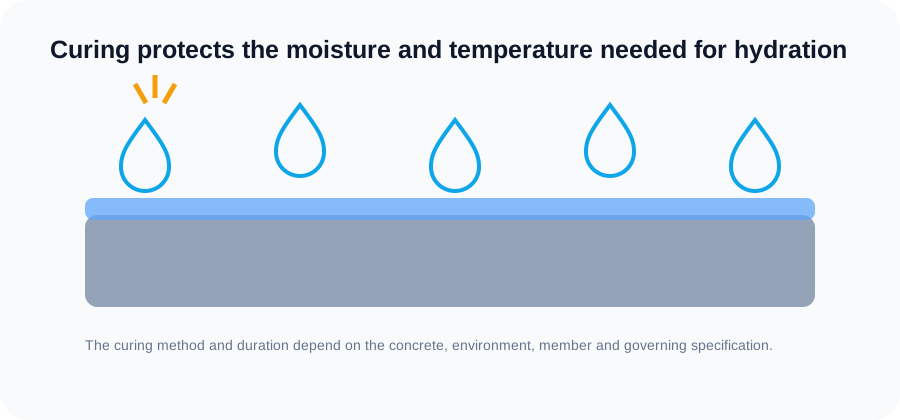 CuringProtect early-age moisture and temperature conditions after placement.