How to think about a UK concrete mix without inventing a “BS 8500 recipe”
BS 8500 helps specify concrete for the UK and complements BS EN 206. Neither document should be reduced to a universal sequence that converts C32/40 into one set of cement, water and aggregate weights. Our calculator adds a transparent preliminary proportioning model so the assumptions can be inspected before trials.
1. Identify the concrete specification first
Start with the actual project requirements: strength class or designated concrete, exposure conditions, intended use, consistence/workability, aggregate size and any restrictions on constituents. A strength class by itself does not define a complete UK concrete specification.
Where a designated concrete is appropriate, the designation carries specification meaning that should not be replaced by a homemade cement:sand:stone ratio. Where designed concrete is specified, the producer must still satisfy the declared performance and applicable production/conformity requirements.
2. Use BS 8500 as a complementary UK standard—not as a “national annex”
BS 8500-1:2023 provides the UK method of specifying and guidance for the specifier alongside the European concrete standard. Its durability guidance and permitted constituent combinations need to be read in the context of the actual project and current standards.
Do not copy a single exposure-class limit table into every project. The controlling requirements depend on the exposure, intended working life/specification basis, concrete type and permitted cement or combination.
3. Set a realistic strength target
Production needs a mean strength comfortably above the characteristic strength to accommodate normal variation. The correct margin is linked to statistical control and the applicable acceptance framework. A fixed “add 8 MPa” value is not a responsible universal UK rule.
Use established production data where available. Where it is not available, follow the appropriate project/producer procedure and use trials rather than disguising a guess as a standard requirement.
4. Estimate the fresh-concrete water demand
Water demand is influenced by consistence, aggregate grading and shape, maximum aggregate size, fines, admixture system, temperature and handling. The calculator therefore treats its starting water value as an engineering estimate for trial—not a quantity prescribed by BS 8500.
The selected w/c must also respect the actual durability and specification limits. If the starting water demand forces an impractical binder content, the answer may be better aggregate optimisation or admixture selection—not simply more cement.
5. Close the constituent volume balance
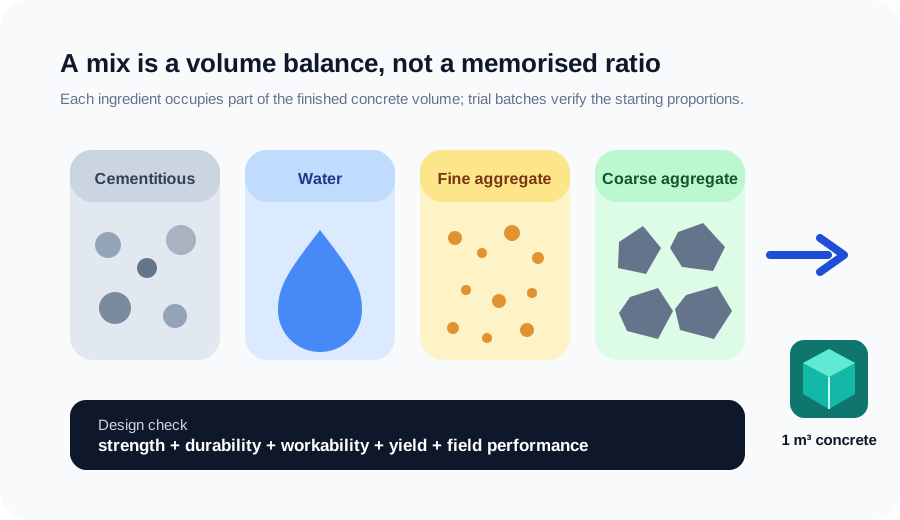
After water, binder, air and any other defined constituents are accounted for, the calculator uses absolute volumes to allocate the remaining volume to aggregates. This gives a consistent way to build a one-cubic-metre starting batch.
6. Correct for actual aggregate moisture
The same laboratory mixture can behave differently at the plant if stockpile moisture changes. Surface moisture contributes to free water; absorption and aggregate condition affect the relationship between the design basis and the batched quantities.
Measure moisture frequently enough for the production conditions and correct aggregate mass and added water together.
7. Prove the mixture with real constituents
Trial work should examine the complete behaviour needed for the job: consistence, air where required, density/yield, cohesion, pumpability/finishability where relevant, strength and any specified durability/performance tests. A trial is where the theoretical mixture meets the actual cement, aggregates, admixtures and production process.
2026 standards transition
BS EN 206-1:2026 was published in March 2026, while BS 8500-1:2023 remains a current complementary British Standard. Project contracts, transition arrangements and related standard updates can lag publication dates, so check the editions actually applicable to the work rather than assuming the newest publication automatically governs every existing project.
A sensible UK workflow
| Stage | Decision | Evidence |
|---|---|---|
| Specify | Strength/designation, exposure, consistence, aggregate and constituent requirements | Contract documents and current BS 8500 / BS EN 206 references |
| Proportion | Choose a technically plausible starting water, binder and aggregate balance | Material properties and transparent calculations |
| Trial | Adjust for the actual constituent combination and placing needs | Fresh and hardened test records |
| Produce | Control moisture, batching and consistency | Production-control data and delivery records |
| Accept | Apply the specified conformity/identity/acceptance process | Required test and project records |