C20/25 concrete: a strength class, not a universal recipe
C20/25 describes characteristic compressive strength. It does not prescribe kilograms of cement, water or aggregate per cubic metre. A defensible starting mix combines the class with exposure, consistency, aggregate, binder and project requirements.
What C20/25 actually tells you
The two numbers represent characteristic compressive strengths associated with cylinder and cube specimens. They are performance labels, not a mix ratio. A C20/25 made with rounded gravel and a water-reducing admixture can look very different from one made with crushed aggregate and another cement system, even though both ultimately satisfy the same strength class.
This is why converting C20/25 into a fixed “1:x:y” recipe is misleading. The material combination and the amount of free water needed for the required consistency determine the binder and aggregate balance.
Strength may not be the controlling requirement
A project can specify C20/25 for strength while the environment imposes a stricter durability requirement. Carbonation, chlorides, freeze-thaw action or aggressive ground can lead to composition limits that matter more than the nominal class. National provisions around EN 206 also differ, so one exposure table copied from another country is not a reliable design input.
The calculator therefore records exposure for context and applies a maximum w/c or minimum binder value only when you enter a verified project limit. A blank field is deliberately safer than a guessed code value.
A useful C20/25 trial-planning sequence
- Confirm the full specification: class, exposure, consistency, aggregate size, placing method and any verified composition limits.
- Use actual material data: replace assumed specific gravities and aggregate behaviour with current supplier or laboratory information where possible.
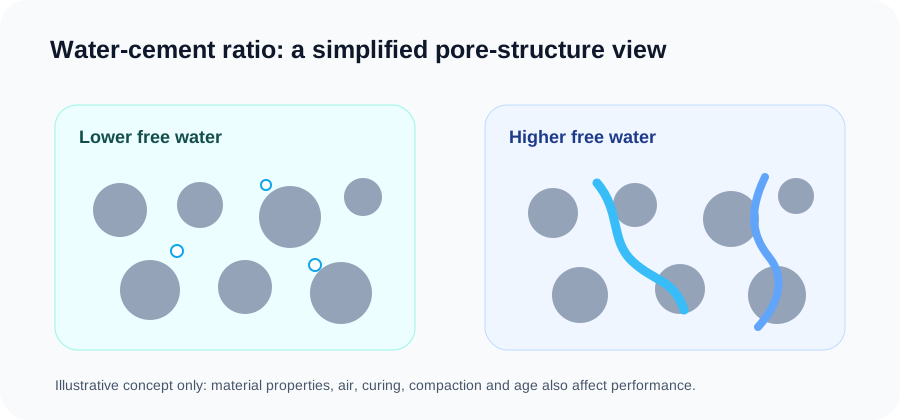
- Choose a trial water demand: aim for the required workability without planning to correct a harsh mix later by adding uncontrolled water.
- Calculate the binder starting point: combine the trial water and w/c, then apply any verified project cap or minimum.
- Close the volume balance: allocate the remaining absolute volume to fine and coarse aggregate and assess whether the combined grading is practical.
- Trial, measure and adjust: record consistency, cohesion, density/yield, air where relevant and strength; change one variable at a time.
Problems that often matter more than “not enough cement”
At this class, a poor aggregate grading can create a harsh mixture that appears to need extra water. Wet sand can silently contribute free water and raise the real w/c above the intended value. Excess paste can increase cost without fixing segregation or finishability. These are proportioning and control problems, not simply strength problems.
Another common error is checking exposure after the trial recipe has already been fixed. Durability belongs at the start of the process because it can change the permitted w/c, binder system, air requirement or acceptance plan.
What to inspect in the first trial
Use C20/25 as a decision point
If you compare this class with C25/30 or C30/37, do not ask only how much more cement the higher class needs. The real change may be a lower trial w/c, a different admixture strategy, improved aggregate packing or a tighter project limit. The transparent calculator makes those drivers visible.